Machine from different angles
Explore angled machining strategies for components that can be awkward to produce with standard flat-bed routing.
Go beyond flat-sheet cutting with specialist 4-axis machining for angled, curved and cylindrical components.
The Tetra gives workshops additional machining options when a conventional 3-axis router is not enough. Tell us what you want to make and we can advise on the right fourth-axis setup.
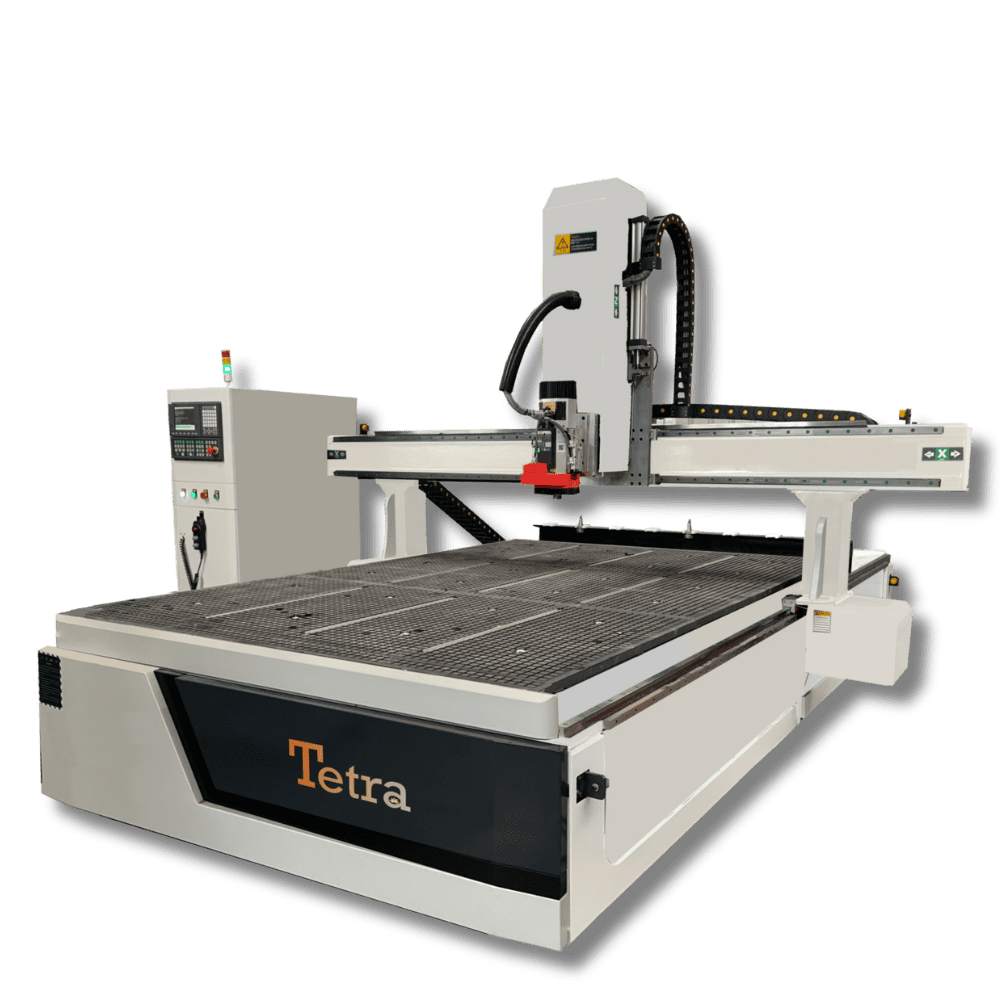
Designed for workshops producing components that call for more than conventional three-axis routing.
Explore angled machining strategies for components that can be awkward to produce with standard flat-bed routing.
Configured rotary devices can support cylindrical timber and other suitably held workpieces.
Suitable fourth-axis configurations can help reduce the need to reposition complex parts by hand.
From specialist timber components and decorative details to contoured and angled workpieces, the Tetra can be specified around the task.
Material, tooling, workholding and extraction suitability depend on the chosen configuration. Our team can help assess your application.
The most useful configuration depends on the shape of your parts, how they are held and which faces need machining. These options are discussed individually with our team.
Additional angular or rotational movement can help approach suitable parts from positions beyond normal X, Y and Z routing.
A different rotational-axis arrangement may be specified for particular machining strategies and workholding requirements.
Rotary workholding options can accommodate appropriate cylindrical components, including specialist timber work.
The available movements, tooling and CAD/CAM requirements are configuration-dependent. We will confirm the arrangement suitable for your project before quoting.
Six standard working areas, with bespoke sizes available. We can help you select a machine based on your largest workpieces, available space and fourth-axis requirements.
1300 × 1300 mm
Compact workshops and smaller components
1300 × 2500 mm
8 × 4 ft sheet-format workshops
1525 × 3050 mm
Larger panels and complex components
2100 × 3050 mm
Wider materials and specialist work
2000 × 4000 mm
Long-format components
2000 × 6000 mm
Oversized and extended-bed work
Working areas reflect the supplied Tetra page. Overall machine dimensions, weights and electrical requirements should be confirmed for the specified machine before purchase.
Your Tetra package includes the essentials to help you start machining, with Opus CNC supporting delivery, installation and operator training.
Delivery, installation and commissioning at your premises, subject to agreed site requirements.
Guidance on machine use, software and safe working practices, tailored to the supplied specification.
VCarve Pro is included. Specialist fourth-axis toolpaths may need additional compatible CAD/CAM software.
Safety light barriers, applicable warranty cover and ongoing Opus CNC technical support.
Tell us your workpiece sizes, materials and what you want to produce. We can recommend the right Tetra setup, including rotary options where appropriate.
Complete the short form and we’ll provide pricing and advice for your intended application.
Clear answers about fourth-axis machining, software, installation and choosing a suitable Tetra.
Three-axis routing uses X, Y and Z movement. A suitable fourth-axis configuration adds rotational movement for specialist angled or cylindrical machining.
That depends on your workpiece geometry, workholding and machining approach. Tell us about your parts and we can advise on the configuration.
Yes. Opus CNC provides delivery, installation and machine training, subject to suitable site access and agreed installation requirements.
VCarve Pro is included. More specialised four-axis machining may require additional suitable CAD/CAM software; discuss your intended toolpaths before ordering.
The current Tetra specification describes three-phase as standard with single-phase availability. Please confirm power requirements for your chosen model and configuration.
Yes, bespoke working areas can be discussed alongside the six standard Tetra sizes.
Asset finance may help you invest in the Tetra while managing cash flow. We work with Anglo Scottish Asset Finance to discuss options, subject to status and approval.
Ask About Finance
Share your part sizes, materials and intended fourth-axis work. We can help you choose a suitable configuration and provide a quotation.
Get a QuotationMachinery supplied by Opus CNC is used by organisations across education, manufacturing, engineering, motorsport, energy, public sector and specialist production environments.