

Olympus PRO ATC
A capable, great-value CNC router for workshops that want to produce more without changing tools by hand.
8 automatic tool positions
Opus PRO control
Both CNC routers change cutting tools automatically, helping your workshop get more done with less manual work. The Olympus PRO ATC offers excellent value for everyday manufacturing, while the Pegasus ATC adds more tool positions and upgraded components for busier production environments.
A capable, great-value CNC router for workshops that want to produce more without changing tools by hand.
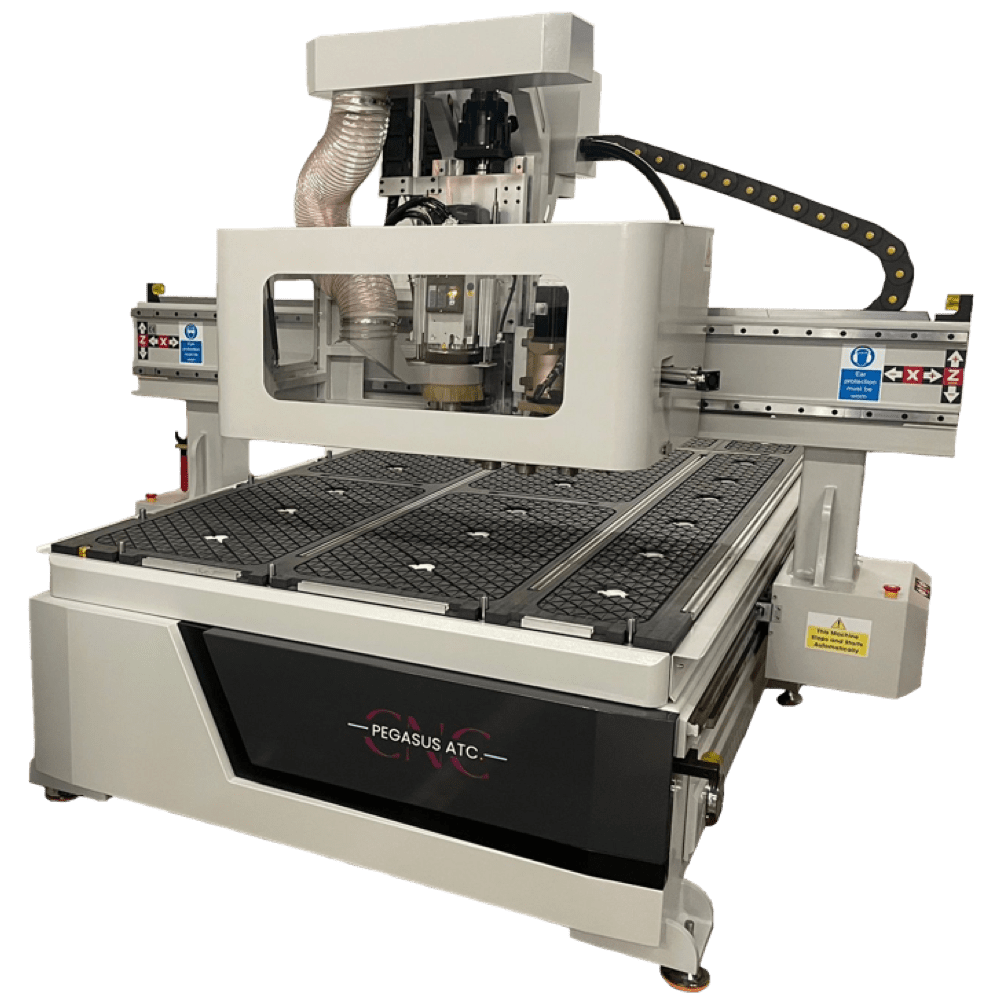
A higher-specification CNC router with room for more tools, designed for busy workshops and demanding daily work.
The right choice depends on what you make, how often you use your machine and your budget. Both are designed for professional workshops, but each offers different advantages.
A great choice for businesses that want the benefits of automatic tool changing at a more affordable price.
The Pegasus is designed for businesses running their CNC router regularly, making large quantities of parts or using lots of different cutting tools.
See the main differences between the two machines, including cutting tools, controls, material hold-down and dust extraction.
Machine specifications, sizes and included equipment can vary. We will confirm the complete specification, safeguarding and warranty terms in your quotation.
The Olympus offers excellent value for everyday cutting. The Pegasus adds upgraded components and extra tool positions for businesses with more demanding requirements.
A dependable CNC router for cutting sheet materials and producing parts using several different tools, without the cost of a higher-specification machine.
A higher-specification CNC router with 12 automatic tool positions and upgraded components, suited to workshops with regular, demanding cutting work.
Both machines come with practical support from Opus CNC, from choosing the right model through to installation, training and aftercare.
The machine swaps cutting tools for you, saving time between different cuts.
Helps keep boards and sheets in place while the machine cuts.
Help you position sheets in the same place each time.
Design parts and prepare cutting jobs using the included VCarve Pro software.
Our engineers install the machine and check it is ready to use.
Practical training on operating the machine, using the software and working safely.
Ongoing help from the Opus CNC team after your machine is installed.
Safety light barriers and stands are supplied as standard on our CNC router packages.
Both machines cut a wide range of sheet materials. Whether you make furniture, signs, plastic components or other products, we can help you choose the right machine for your workload.

Produce cabinet panels, furniture parts, doors and other components from MDF, plywood, chipboard and laminated boards. The Pegasus is particularly suited to busier production lines.

Cut acrylic, foam, composite panels and other materials used for signs, shopfitting and displays. Both machines can handle jobs that need several cutting tools.

Make parts from plastics and other suitable sheet materials. We can advise on the right cutting tools and machine setup for your materials.
The best setup depends on what you cut, the size of your materials, your available power supply and the type of jobs you produce.
Tell us what you make and we will help you choose the right bed size, cutting tools, vacuum system and dust extraction.
Answers to common questions about choosing between these two CNC routers.
Yes. Both change cutting tools automatically. The Olympus stores 8 tools in a straight row, while the Pegasus stores 12 tools in a rotating carousel.
The Olympus PRO ATC is generally the more affordable option and is a great choice for many everyday manufacturing jobs.
The Pegasus is worth considering if your workshop runs long shifts, frequently changes cutting tools or needs the benefits of its upgraded components. Actual cutting times depend on the job and material.
Both machines normally require a three-phase power supply. Contact us if your workshop only has single-phase power so we can check what options are available.
Standard bed sizes include 1300 x 1300mm, 1300 x 2500mm, 1525 x 3050mm, 2100 x 3050mm, 2000 x 4000mm and 2000 x 6000mm. Bespoke sizes can also be discussed.
VCarve Pro is supplied as standard with Olympus PRO ATC and Pegasus ATC CNC machine packages, with training included as part of the installation process.
Both machines may be suitable for certain aluminium cutting jobs. Let us know the type and thickness of aluminium you use so we can advise on the right tools and any extra equipment needed.
Yes. Visit our Durham showroom to see the machines and discuss the work you want to produce.
Tell us the size of machine you need and what materials you cut. We will explain the differences and help you choose the best option for your workshop.
Tell us a little about your requirements and we will help you compare the two machines.