
The Hidden Costs of Owning a CNC Machine and How to Control Them
The purchase price is only one part of CNC ownership. Tooling, extraction, energy, software preparation, training, maintenance and lost production time all influence the true cost of running the machine.
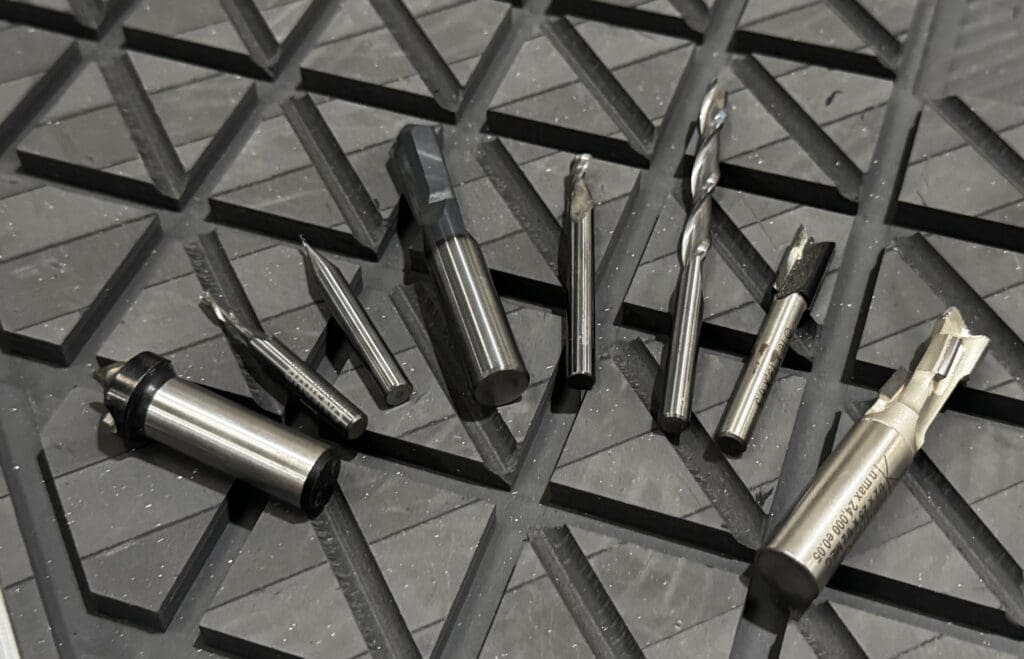
A CNC router can improve output, accuracy and production capacity, but the machine must be budgeted as a complete working system. Understanding the ongoing costs before purchase makes those costs easier to plan, reduce and control.
The true cost begins after installation
A new CNC owner will naturally focus on the machine price, specification and delivery. Once production begins, the ongoing costs become more visible: cutters need replacing, filters need cleaning, software takes time to prepare and the vacuum and extraction systems consume energy.
These costs are not a reason to avoid CNC machinery. They are part of running productive equipment and can usually be managed through sensible purchasing, maintenance and operating habits.
The most expensive CNC costs are often not the largest invoices. They are the repeated losses of time, material and productivity that go unnoticed.
Consumables
Cutters, collets, spoilboards, filters and other working components wear over time.
Utilities
The router, extraction, vacuum pumps and compressed-air system all consume energy.
Labour
File preparation, setup, loading, cleaning and operator development require time.
Downtime
Lost production can cost more than the component that caused the stoppage.
Tooling is a continuous cost
Every cut wears the tool. The rate of wear depends on the material, cutter geometry, feed rate, spindle speed, pass depth and chip clearance.
Using a cheap or unsuitable cutter can appear to save money, but poor edge quality, shorter tool life and wasted material can make it the more expensive option.
Collets and tool holders also wear
Collets are precision consumables. Dust, over-tightening and repeated tool changes gradually affect their grip and concentricity.
Cleaning and replacing worn collets protects the cutter, spindle and finished component.
Tool life depends on the complete cutting process
Suitable feeds, speeds, pass depths and toolpaths help the cutter remove material efficiently. Running too slowly can create rubbing and heat, while excessive loading can cause chatter or breakage. Good tooling used with poor settings will still become an expensive consumable.
Extraction and filtration need ongoing attention
Extraction protects the working environment and helps prevent dust from building up around the machine, sensors and motion components.
Filters, bags, bins and ducting all require inspection. Restricted airflow reduces performance and can lead to more cleaning, higher temperatures and avoidable downtime.
- Empty collection points before they become overfilled.
- Clean or replace filters at suitable intervals.
- Check ducting and hoses for leaks or blockages.
- Position the dust shoe correctly for each job.
Under-specified extraction creates false savings
Choosing a system because it is cheaper rather than correctly matched to the machine and material can increase dust build-up, cleaning time and filter problems.
Extraction should be treated as part of the CNC installation, not an optional accessory added after problems appear.
Downtime is often the most expensive cost
When the machine stops, production stops with it. The replacement component may be relatively inexpensive, but missed deadlines, delayed orders and lost operator time can be far more costly.
Preventative care cannot remove every failure, but it can reduce the number of avoidable stoppages and help developing problems get noticed sooner.
Remove dust, debris and loose offcuts before they affect the next job.
Review lubrication, air supply, extraction and vacuum performance.
Check fasteners, seals, hoses, collets and visible machine condition.
Arrange structured inspection before a small issue becomes lost production.
A short maintenance routine costs minutes. An unexpected stoppage can cost an entire production day.
File preparation has a real labour cost
Poorly prepared files can create unnecessary tool changes, excessive air cutting, inefficient nesting and longer cycle times.
The machine may be moving for the entire job, but not all movement adds value to the finished component.
- Use templates for recurring work.
- Group operations that use the same cutter.
- Review nesting before committing a full sheet.
- Simulate unfamiliar toolpaths before cutting.
Material waste quickly adds up
Incorrect dimensions, poor nesting, missed toolpath checks and weak hold-down can turn a valuable sheet into waste within minutes.
A test component or software simulation is often less expensive than discovering the mistake after the full program has started.
Electricity and compressed air
Running costs include more than the spindle. Vacuum pumps, extraction systems, compressors and workshop services may operate throughout the production day.
- Close vacuum zones that are not required.
- Batch similar jobs to reduce unnecessary idle running.
- Switch off supporting equipment when it is no longer needed.
- Maintain compressors, pumps and filters for efficient operation.
Measure before guessing
An energy monitor can help identify which parts of the workshop consume the most power and whether pumps, extraction or compressors are being left running unnecessarily.
Small reductions in repeated energy waste can become meaningful across a full year of production.
Operator skill affects every other cost
A confident operator is more likely to select the correct cutter, recognise poor cutting sounds, prepare efficient toolpaths and identify maintenance issues early.
Training should continue after installation. As the workshop takes on new materials and more complex work, the team’s understanding should develop with it.
Less waste
Better setup and file checking reduce damaged sheets and incorrect parts.
Longer tool life
Informed feeds, speeds and pass depths reduce unnecessary cutter stress.
Faster diagnosis
Experienced operators recognise when sound, finish or hold-down changes.
Better output
Efficient preparation and confident operation improve productive machine time.
Costs worth planning before purchase
- Suitable tooling for the planned materials.
- Extraction, filtration and replacement filters.
- Vacuum pumps, compressed air and electrical supply.
- Software, file preparation and operator time.
- Spoilboards, collets and other consumables.
- Servicing and a realistic maintenance routine.
Costs that can often be reduced
- Premature tooling wear from unsuitable settings.
- Material waste from unchecked files or weak hold-down.
- Energy used by idle pumps and extraction systems.
- Downtime caused by neglected cleaning and inspection.
- Long cycle times created by inefficient toolpaths.
- Repeat mistakes caused by insufficient operator training.
Plan for the complete cost, not just the machine
CNC ownership is most successful when the workshop budgets for the machine, supporting equipment, consumables, training and long-term maintenance from the beginning.
Machines such as the Olympus ATC CNC router and Pegasus ATC CNC router can deliver significant production benefits, but the return on that investment depends on how efficiently the complete system is operated.
Opus CNC provides delivery, installation and operator training, together with ongoing technical support and CNC servicing to help customers maintain reliable production.
Owning CNC machinery is not only about buying the equipment. It is about building an efficient process around it.
Planning your first CNC investment?
Speak to the Opus CNC team about machine selection, supporting equipment, workshop preparation, installation, training and ongoing servicing.