
How Quickly Can a CNC Router Pay for Itself?
For a small business, CNC payback is driven by more than cutting speed. Outsourcing brought in-house, labour capacity, reduced rework, better material yield and profitable new work all contribute to the return.
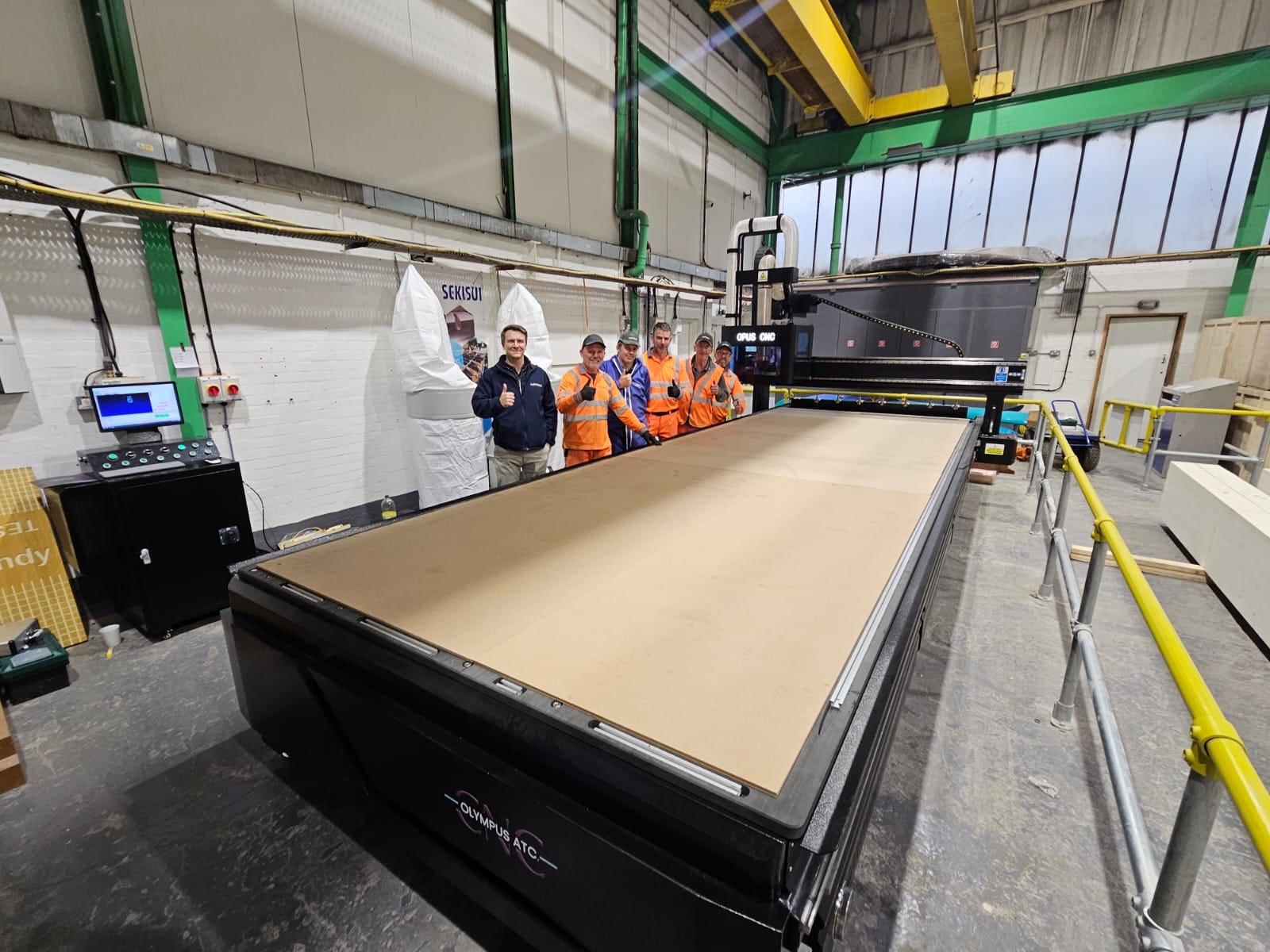
Some CNC routers repay their investment quickly because they replace regular outsourcing or remove a serious production bottleneck. Others take longer because the workload is occasional. The useful answer comes from calculating the monthly value the machine can realistically create in your own workshop.
There is no honest universal payback period
A workshop outsourcing several thousand pounds of CNC cutting every month may see a return much sooner than a business buying a machine for occasional speculative work. Machine utilisation, product margin and operator readiness all affect the result.
Payback should therefore be treated as a business calculation rather than a sales promise.
A CNC router pays back through measurable monthly benefit—not simply because it is capable of producing more work.
Outsourcing saved
Regular subcontract cutting can become internal production capacity.
Labour released
Skilled employees spend less time marking, templating and cutting manually.
Waste reduced
Repeatability, nesting and fewer errors can improve material yield.
Profit added
New capacity may allow the business to accept profitable work it currently declines.
A simple CNC payback calculation
Begin with the complete project cost, then divide it by the average net monthly benefit created by the machine.
The monthly figure should be calculated after allowing for tooling, energy, maintenance, finance costs and any additional operator time. Use contribution or gross profit from new work—not total sales revenue.
What belongs in the investment figure?
- The CNC router and selected options.
- Delivery, installation and commissioning where not included.
- Extraction, vacuum equipment and compressed air.
- Electrical work and workshop preparation.
- Initial tooling, collets and spoilboard materials.
- Software, training and finance charges where applicable.
What belongs in the monthly benefit?
- Outsourced cutting costs no longer paid.
- Labour hours released for other productive work.
- Reduced material waste and fewer remakes.
- Additional contribution from work now completed in-house.
- Faster turnaround and improved production capacity.
- Less time spent making templates or setting out components manually.
An illustrative small-business example
The following example is not a quotation or guaranteed result. It shows how a workshop might organise the calculation using its own figures.
With a complete investment of £23,000 and a genuine net benefit of £2,300 per month, the simple payback would be approximately ten months. Real results will vary.
The same machine can produce very different returns
These simple scenarios show why utilisation matters. Each assumes a complete investment of £24,000, but the monthly benefit changes according to the work available.
24 months
Approximately £1,000 net monthly benefit from occasional outsourcing savings and modest production use.
12 months
Approximately £2,000 net monthly benefit from regular repeat work, labour savings and reduced outsourcing.
8 months
Approximately £3,000 net monthly benefit where the machine removes a major bottleneck and runs productive work consistently.
The fastest payback normally comes from work you already understand
A confirmed outsourcing bill, repeated manual process or existing order bottleneck creates a stronger return case than hoping the machine will generate an entirely new market by itself. New products can improve the return, but they should not be the only reason the calculation works.
1. Bringing regular outsourced work in-house
Outsourcing is useful when CNC work is occasional. Once it becomes a regular monthly expense, the business may be funding someone else’s machinery while also accepting their lead times and minimum charges.
Include transport, waiting time, urgent-job premiums and the margin lost when revisions cannot be completed quickly. These costs are easy to overlook when comparing only the cutting invoice.
2. Releasing skilled labour
CNC should not be presented simply as replacing employees. For many small businesses, the greater benefit is allowing skilled people to spend less time on repetitive marking, drilling and routing.
That time can move into assembly, finishing, installation, customer work or other activities that generate more value.
Value the time realistically
Do not assume every saved hour automatically becomes profit. The time only has financial value when it is used productively, avoids overtime or allows more profitable work to be completed.
A conservative calculation is normally more useful than counting every theoretical minute.
3. Reducing waste, variation and rework
Manual errors cost more than the sheet being replaced. They can delay assembly, create return visits, consume extra labour and interrupt other jobs.
Once a CNC file and setup have been proven, repeatable machining can reduce variation across a batch. Better nesting may also improve how many useful components are produced from each sheet.
Repeatable hole positions and dimensions reduce avoidable component errors.
Digital layouts can use sheet material more efficiently than manual placement.
Consistent components are easier to fit together without corrective work.
Proven jobs can be recalled without recreating templates or setting-out work.
4. Increasing capacity without proportional labour growth
A CNC router can complete cutting while the operator prepares the next sheet, assembles components or manages another part of production.
Automatic tool change can improve this further where jobs regularly require several cutters, although the extra investment only makes sense when the workflow uses that automation.
5. Accepting work currently being declined
Detailed profiles, repeated drilling patterns, pockets, rebates and shaped panels may be slow or impractical using the current process.
Only include new work in the ROI calculation when there is credible demand. Use the profit contribution after materials and direct costs rather than the headline selling price.
What can make payback slower?
Insufficient work
The machine spends most of the week idle because demand was overestimated.
Wrong specification
The workshop pays for automation or capacity that the normal workload rarely uses.
Poor preparation
Electrical, extraction, access or workflow problems delay productive use.
Limited training
The machine is available, but the team lacks confidence to move work onto it.
Costs that are often forgotten
- Replacement cutters, collets and spoilboards.
- Extraction filters, bags and routine maintenance.
- Electricity for the router, pumps and extraction.
- Operator time for programming and setup.
- Finance interest and documentation charges.
- Early test material and production development.
Benefits that are often forgotten
- Shorter response time for prototypes and revisions.
- Greater control over production scheduling.
- Reduced dependence on one manual process.
- More consistent quality across repeat orders.
- Ability to produce jigs and templates internally.
- Additional capacity during busy periods.
Finance can improve cash flow, but it does not change the fundamentals
Asset finance can spread the cost and allow the machine to begin generating value while it is being paid for. A useful comparison is whether the expected monthly net benefit comfortably exceeds the finance payment and additional operating costs.
Finance does not make an underused machine profitable. Buyers should compare the total amount payable, tax treatment with their adviser and the effect on working capital before committing.
Build your own 30-day ROI audit
Before requesting a quotation, record one normal month of production. The figures do not need to be perfect; they need to be honest enough to show where CNC could create measurable value.
Record cutting invoices, transport, delays and urgent-job charges.
Measure time spent marking, templating, drilling and cutting manually.
Record remakes, damaged sheets and corrective work caused by variation.
Note enquiries declined because the workshop lacks capacity or capability.
Choose the machine that gives the strongest return—not the largest specification
The Olympus CNC router may provide the strongest return for a small workshop completing straightforward work, while an Olympus ATC or Pegasus ATC can offer greater value where multi-tool production and daily output justify the additional automation.
Opus CNC recommends machinery around materials, bed size, output and workflow. Complete CNC router packages include UK delivery, installation, commissioning, operator training and ongoing support from the Opus team.
The quickest payback comes from matching the investment to a real production need and then giving the team the support to use it properly.
Would CNC create a measurable return in your business?
Send us a typical job, your current outsourcing spend or the manual process you want to improve. The Opus CNC team can help identify the most suitable machine and the figures worth including in your own payback calculation.