
Is It Time to Invest in CNC? 5 Signs Your Business May Be Ready
A CNC router can transform capacity, consistency and the type of work a business can accept. The right time to invest is not simply when the technology looks impressive—it is when the machine solves a clear and recurring production problem.
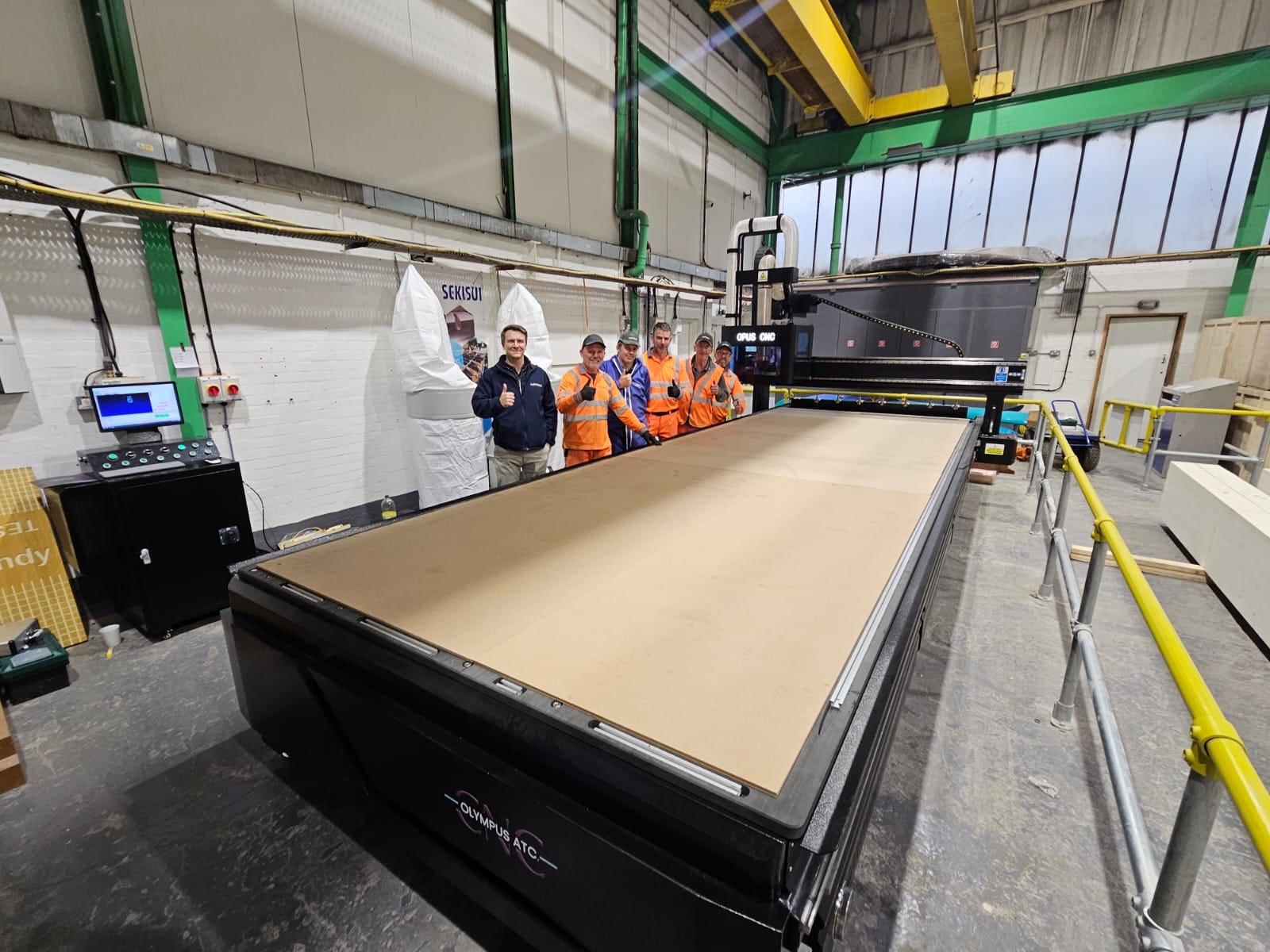
CNC investment should support work that already exists or a realistic opportunity the business is ready to pursue. These five signs can help identify whether manual production, outsourcing or limited capacity is beginning to hold the company back.
Buying a CNC router should solve a business problem
The strongest CNC investments usually begin with a specific operational need: too much labour is tied up in repetitive cutting, outsourced work is reducing margins, demand is becoming difficult to manage or customers are asking for work the current workshop cannot produce efficiently.
A machine purchased without a clear application can sit underused. A machine selected around materials, products and production targets can quickly become central to the workflow.
The question is not simply “Can we afford a CNC router?” It is “What repeated cost, delay or limitation will the CNC router remove?”
Capacity
Current methods are struggling to keep pace with demand or planned growth.
Consistency
Repeat jobs depend too heavily on manual marking, cutting or individual technique.
Margin
Outsourcing, rework or labour-intensive processes are reducing profitability.
Opportunity
The business is turning away work that requires CNC accuracy or repeatability.
1. Repetitive work is consuming too much labour
Manual cutting, drilling, templating and marking can work well at low volumes. As order quantities grow, the same operations begin tying up skilled employees who could be completing higher-value work.
CNC becomes particularly useful when the workshop repeatedly produces panels, cabinet components, signage, furniture parts, templates or profiles that follow digital drawings.
- The same shapes are produced every week.
- Operators spend hours measuring and marking sheets.
- Skilled staff are occupied by repetitive cutting.
- Production depends on one experienced person.
What CNC changes
Once the file and tooling are prepared, the machine can repeat the process with consistent movement and dimensions.
The operator remains essential, but their role shifts towards setup, programming, quality control and managing the wider workflow rather than manually reproducing every part.
2. Outsourcing is becoming expensive or restrictive
Outsourcing is often the sensible starting point when CNC work is occasional. It becomes less attractive when transport, minimum charges, lead times and supplier schedules begin affecting margins or customer deadlines.
Bringing suitable work in-house can provide greater control over revisions, prototypes, urgent jobs and small production batches.
Calculate the complete outsourcing cost
Compare more than the supplier’s cutting price. Include delivery, waiting time, damaged or incorrect parts, minimum-order quantities and the margin lost when the business cannot respond quickly.
Regular monthly outsourcing spend can provide a useful starting point when assessing the potential return from CNC ownership.
3. Demand is growing faster than the current process
A healthy order book is positive, but growth becomes difficult when the workshop can only increase output by adding overtime or more manual labour. CNC can increase capacity while keeping production repeatable, especially where multiple parts are nested into full sheets or the same component is needed across several jobs.
Signs that capacity is becoming a constraint
Customers are waiting longer because cutting and preparation cannot keep pace.
Extra hours are being used to maintain normal output rather than manage an occasional peak.
The team is turning away work because the current process lacks capacity or capability.
One manual stage controls the speed of the entire workshop.
4. Inconsistency and rework are affecting profit
Small differences in manually produced parts can create larger problems during assembly, installation or fitting. Incorrect hole positions, inconsistent dimensions and mismatched components all add labour without adding value.
CNC does not remove the need for checks, but once a proven file and setup are in place it can greatly improve repeatability across a batch.
Measure the cost of errors
Material waste is only one part of rework. Also consider the time spent remaking parts, delaying assembly, returning to site or correcting a problem after installation.
When avoidable variation is becoming a regular cost, repeatable CNC production may provide value beyond simple cutting speed.
5. New opportunities require more capability
CNC can allow a business to produce components that are difficult, slow or inconsistent by hand. This may include detailed profiles, pockets, rebates, drilling patterns, signage, furniture panels, jigs, templates and repeat production parts.
The opportunity should be realistic and connected to a market the business understands—not simply a list of things the machine could theoretically make.
Look for work that complements the business
The safest expansion often comes from improving or extending an existing product range. A kitchen manufacturer may bring cabinet processing in-house, while a sign company may expand into shaped panels and dimensional lettering.
CNC is most valuable when it strengthens the company’s existing expertise rather than distracting from it.
Your workshop may be ready when:
- You have repeatable work suitable for CNC production.
- Outsourcing is now regular rather than occasional.
- Manual production is restricting growth or delivery times.
- Rework and inconsistency have a measurable cost.
- You can identify the products and materials the machine will process.
- An operator can be given time to learn and own the process.
It may be better to wait when:
- The machine would depend on one unconfirmed order.
- There is no clear operator or training plan.
- The workshop lacks suitable space, access or services.
- The required materials and applications are still unclear.
- The decision relies entirely on the machine creating demand by itself.
- The wider costs of tooling, extraction and maintenance have not been considered.
Check that the workshop is ready as well as the order book
Before purchasing, consider access, working area, material handling, electrical supply, extraction, vacuum equipment and the space needed to load full sheets safely.
The machine also needs an operator who has time to learn the software and develop proven settings. CNC can reduce manual work, but it does not remove the need for training, preparation and ownership.
Space and access
Confirm delivery access, machine footprint, maintenance clearance and sheet loading space.
Services
Plan electrical supply, extraction, compressed air and vacuum requirements.
People
Choose the operators who will receive training and take responsibility for the machine.
Workflow
Plan how files, materials, finished parts and offcuts will move through the workshop.
Choose the CNC router around the work
A business producing straightforward sheet components may not need the same machine as a high-volume manufacturer completing multi-tool jobs throughout the day.
The Olympus CNC router provides an accessible route into industrial CNC routing, while the Olympus ATC and Pegasus ATC ranges support more automated and demanding production workflows.
Opus CNC reviews the materials, sheet sizes, processes, output targets and available workshop space before recommending a machine. Delivery, installation and operator training are included as part of the complete CNC router package.
The right CNC router should fit the work you expect to produce—not simply the largest specification available.
Could CNC remove a bottleneck in your business?
Speak to the Opus CNC team about your materials, current process, outsourcing costs, available space and production goals. We can help you assess whether CNC is the right next step and which machine best fits the work.