
Manual CNC Router vs Automatic Tool Change Which Is Right for Your Business?
Automatic tool changing can make multi-stage production faster and more efficient, but not every workshop needs it. The right choice depends on the jobs you produce, how often tools change and where operator time is being spent.
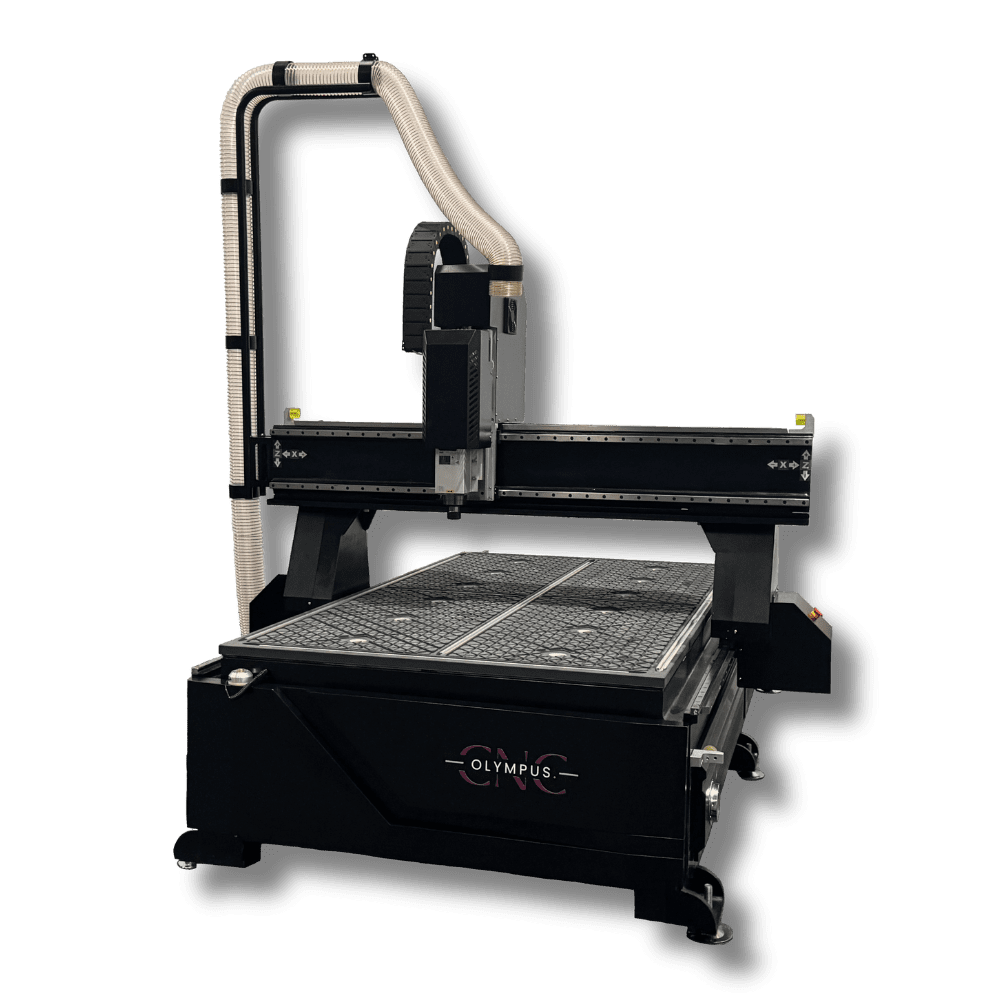 Manual CNC
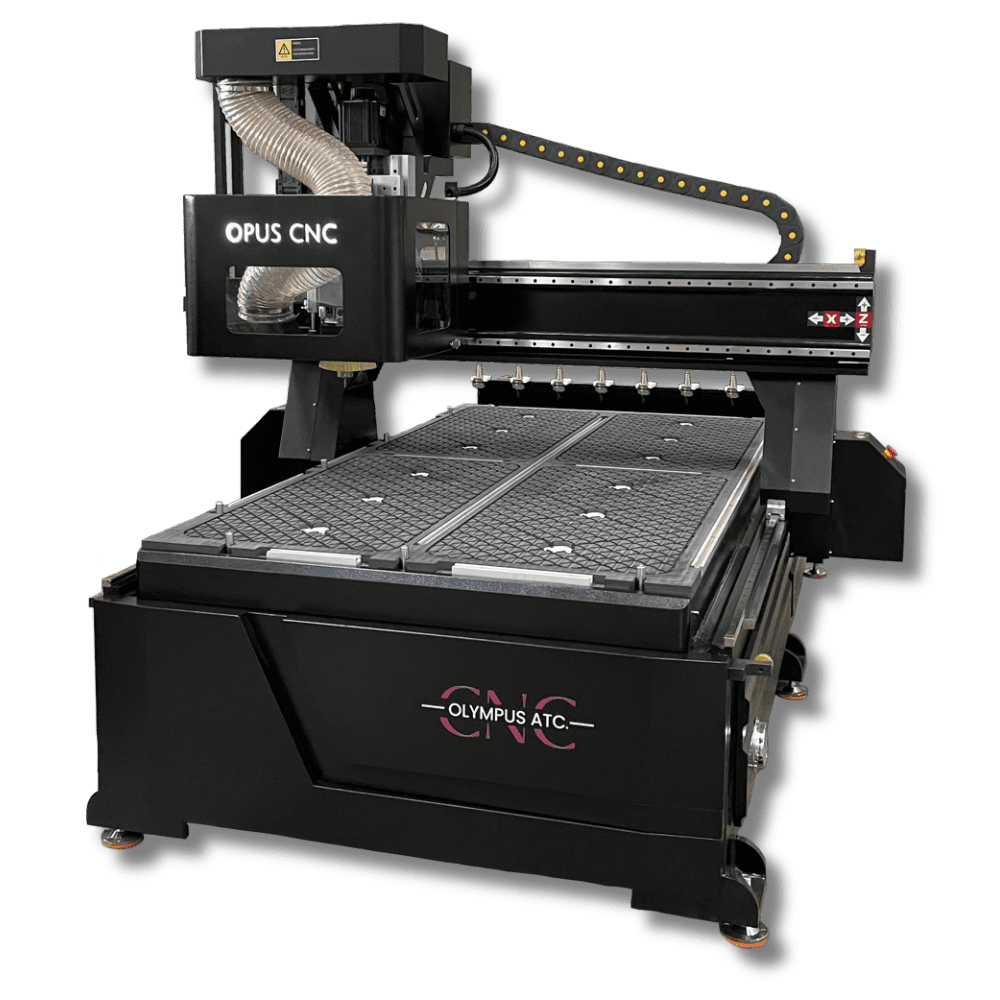 Automatic Tool Change
Manual and automatic tool change CNC routers can both produce accurate, professional components. The main difference is not cut quality—it is how the machine moves between operations and how much operator involvement the production process requires.
The difference at a glance
A manual CNC router requires the operator to stop the process and physically change the cutter when the next operation needs a different tool. An ATC router stores multiple tools and changes between them automatically as part of the programmed job.
What does manual tool changing actually involve?
When the job reaches an operation requiring a different cutter, the machine stops and the operator changes the tool. The new cutter is secured, its position or length is confirmed and the program continues.
On the Olympus CNC router, manual tool changes can normally be completed in under a minute. For jobs that use one cutter—or only require an occasional change—that interruption may have little effect on overall production.
What does an ATC system change?
An automatic tool change router stores several prepared tools in dedicated positions. The toolpath tells the machine which tool is needed, and the CNC changes it without the operator removing and refitting the cutter.
The Olympus ATC uses an eight-position linear ISO30 system, while the Pegasus ATC uses a 12-position carousel positioned close to the spindle for faster multi-tool workflows.
The key question: how many tools does a typical job use?
If most jobs use a single profiling cutter, automatic tool changing may provide limited benefit. If a normal sheet requires drilling, pocketing, engraving and profiling with several cutters, the time saved across repeated tool changes can become far more valuable.
When a manual CNC router is the sensible choice
Manual tool change is not a lesser form of CNC routing. For the right workload, it offers a straightforward and cost-effective route into industrial CNC production without paying for automation that the business may rarely use.
Manual CNC may suit you when:
- Most jobs use one main cutter.
- Tool changes are occasional rather than constant.
- Production volumes are modest or still developing.
- An operator is already working close to the machine.
- Keeping the initial investment lower is important.
- You want a straightforward first industrial CNC router.
ATC may suit you when:
- Jobs regularly use several different cutters.
- You repeat the same multi-operation sheets or components.
- Manual tool changes are interrupting another employee’s work.
- Production speed and workflow consistency are priorities.
- You expect volumes or product complexity to increase.
- You want a more automated production process from the start.
Where manual machines work particularly well
Sign makers profiling sheet materials, schools and colleges introducing CNC, workshops producing templates, and small manufacturers completing straightforward repeat parts may all find that manual tool changing provides everything they need.
The machine can still drill, pocket, engrave and profile. The difference is that the operator changes the cutter between those stages.
Where ATC starts to earn its place
Cabinet and furniture production often combines drilling, rebates, pockets and final profiling. Joinery, displays, plastics and repeat manufacturing can also require several operations across every sheet.
When those tool changes happen throughout the day, automatic changing can release operator time and make cycle times more predictable.
ATC saves more than the seconds spent changing a cutter
The benefit is not only the physical change itself. The operator no longer needs to stop another task, return to the machine, identify the next cutter and restart the process each time.
Fewer interruptions
The operator can prepare materials, inspect finished parts or complete other workshop tasks.
Consistent sequencing
The programmed job controls the order of tools and machining operations.
Repeat production
Saved files and prepared tool positions support dependable recurring workflows.
More complex jobs
Several operations can be combined without repeated manual changes.
Do not choose ATC for the wrong reason
An automatic tool changer does not automatically improve the drawing, toolpath, cutter selection or material hold-down. It automates changes between correctly prepared tools.
A workshop producing simple single-tool jobs will not necessarily gain enough from ATC to justify the additional investment.
Do not outgrow a manual machine immediately
Choosing purely on the lowest initial price can also create a false saving if the business already completes multi-tool work throughout the day.
Frequent pauses, operator interruptions and additional setup time should be considered alongside the machine purchase price.
A middle ground: start manual and retain an upgrade path
Some businesses know they will need more automation eventually but cannot justify it from day one. The Olympus PRO CNC router provides a higher-specification manual platform that can be retrofitted with automatic tool changing as production develops.
This route can work well when the workshop needs stronger performance now and wants to avoid replacing the complete machine if multi-tool production increases later.
An upgrade path is valuable only when it matches a realistic growth plan. It should not replace choosing the correct machine for the work already in front of you.
How the Opus CNC ranges compare
Manual tool change, 6kW air-cooled spindle and a straightforward DSP-controlled workflow.
Higher-specification manual CNC platform with the option to add automatic tool changing later.
Eight-position linear ISO30 tool changer, 9kW HQD spindle, servo motors and Opus PRO control.
12-position carousel, Italian HSD spindle, Yaskawa servos and Syntec control for demanding production.
Questions that help identify the right machine
- How many different cutters does a normal job require?
- How many sheets or components are produced each week?
- Is an operator available whenever the tool needs changing?
- Are repeated interruptions affecting another stage of production?
- Will the workload become more complex over the next few years?
- Is the priority lower initial cost or greater production automation?
The answer may be different for every workshop
A manual Olympus can be the right investment for a first-time CNC owner producing straightforward work. An Olympus ATC can offer the right balance for a growing workshop, while the Pegasus ATC is intended for more demanding production.
The machine should be selected around actual jobs, materials, working area and output—not simply because ATC sounds more advanced.
Manual or ATC: choose around the workflow
Manual tool changing keeps the purchase straightforward and affordable when jobs are simple. Automatic tool changing becomes increasingly valuable as the number of tools, repeated batches and cost of operator interruptions increase.
Opus CNC can review sample files, typical jobs, materials and expected production levels before recommending the most appropriate machine. All Opus CNC router packages include machine and software training, with delivery, installation and long-term support available throughout the UK.
The best machine is not always the most automated one. It is the machine that removes the right bottleneck from your production process.
Not sure whether your business needs ATC?
Tell us what you manufacture, the materials you use and how many tools a typical job requires. The Opus CNC team will recommend the most suitable manual or automatic tool change option without overspecifying the machine.