
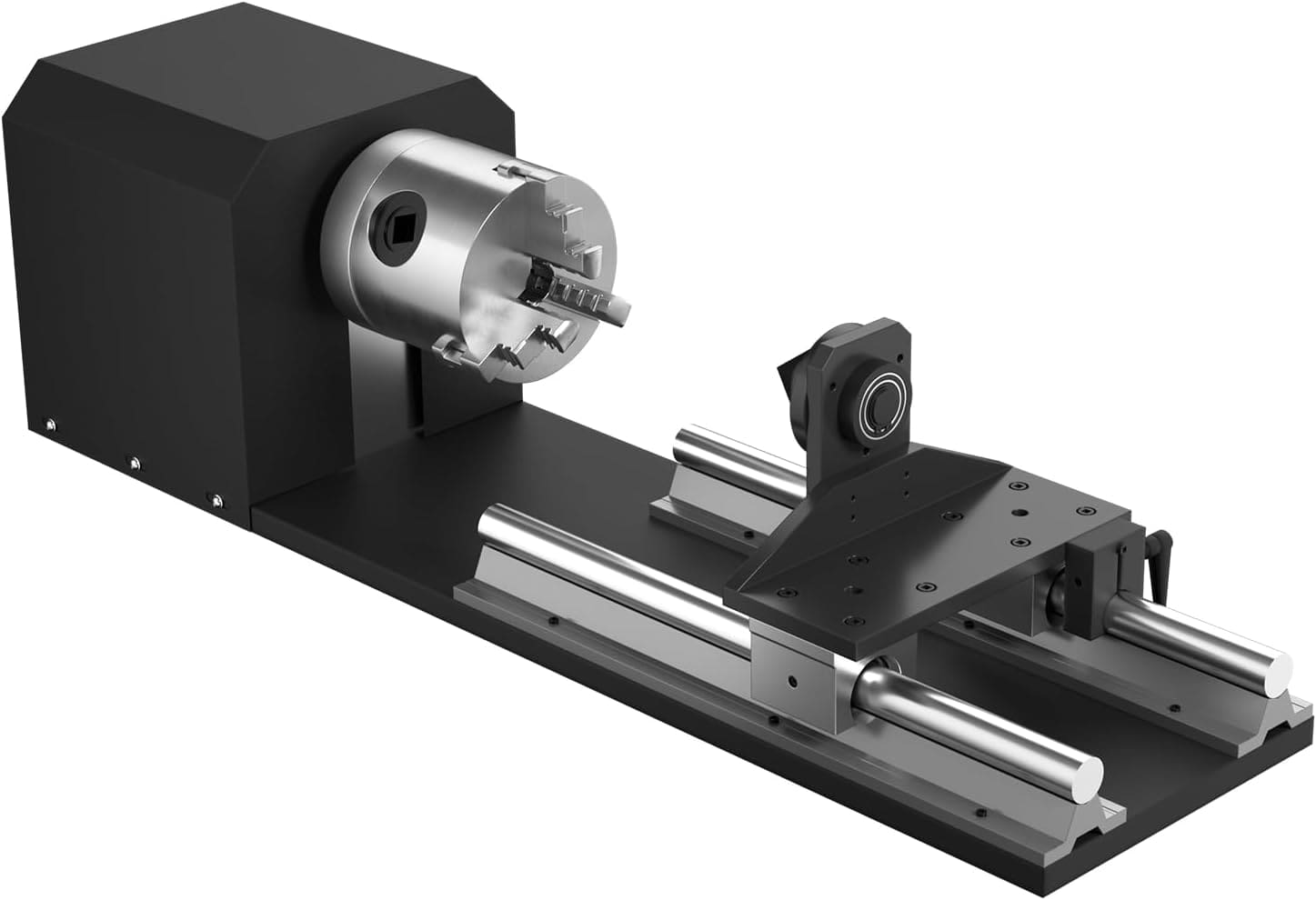
CO₂ laser cutters are already incredibly versatile machines, capable of cutting and engraving materials such as acrylic, wood, card, leather, paper, fabric and more. Add a rotary device attachment, and that versatility expands even further, giving users the ability to engrave around curved and cylindrical items rather than being limited to flat sheet materials.
What is a rotary device attachment?
A rotary device is an accessory designed to hold and rotate an object while the laser engraves onto its surface. Instead of the laser working across a flat bed only, the rotary attachment turns the item in a controlled way, allowing the design to follow the curve of the product.
This is particularly useful for businesses that want to offer personalisation, branding, decorative engraving or product marking on items that are not flat. From drinkware and glassware to cylindrical wooden products, awards and promotional items, a rotary device helps create clean, accurate results across rounded surfaces.
What can you engrave with a rotary attachment?
A rotary device can be used across a wide range of suitable cylindrical and curved products. The exact compatibility will depend on the shape, size, material and finish of the item, but common applications include:
- Personalised glasses, bottles, tumblers and drinkware.
- Wooden cylinders, gift items, keepsakes and decorative products.
- Acrylic tubes, display items and branded promotional products.
- Leatherette items, coated products and selected presentation pieces.
- Awards, trophies and bespoke engraved gifts.
- Corporate merchandise, event products and branded customer items.
Why it is useful for businesses
For many companies, the biggest benefit of a rotary attachment is the ability to offer a wider range of finished products from the same machine. It gives users more flexibility, more creative options and more opportunities to add value through customisation.
- Create higher-value personalised products without outsourcing.
- Expand your range beyond flat sheet engraving.
- Produce repeatable results for batches and one-off custom work.
- Support seasonal, promotional and corporate engraving projects.
How does the rotary attachment work?
The item is placed onto the rotary device, which sits inside the laser bed. Once the machine is set up correctly, the rotary attachment rotates the object while the laser head engraves the artwork. This movement allows the laser to maintain the correct position across the curved surface.
Position the item
The cylindrical product is placed securely onto the rotary attachment, making sure it sits level and rotates smoothly.
Set the focus
The correct laser focus is set for the surface of the item to help achieve a sharp, accurate engraving.
Prepare the artwork
The design is checked, sized and positioned correctly for the diameter and engraving area of the object.
Engrave the product
The rotary device turns the item as the laser engraves, allowing the design to follow the curve of the surface.
Ideal for personalisation and added value
Personalisation is a strong growth area for many businesses. Customers increasingly want products that feel unique, whether that is a branded glass for an event, a personalised gift, a custom award or a product marked with a company logo.
With a rotary attachment, a CO₂ laser cutter becomes a more flexible production tool. It allows businesses to respond to custom requests quickly, bring more work in-house and create professional-quality engraved items with less reliance on third-party suppliers.
Materials and suitability
As with all laser work, the material and surface finish matter. CO₂ lasers are well suited to engraving many organic and coated materials, including wood, acrylic, glass, leather and certain painted or coated items. Bare metals are not typically engraved directly by a standard CO₂ laser without a suitable coating, marking spray or specialist process.
Before running production work, it is always best to test settings on the material first. This helps confirm the engraving quality, contrast, speed, power and finish before committing to a full batch.
Drinkware engraving
Glasses, bottles, tumblers and jars
Ideal for personalised gifts, events and corporate branding.
Promotional products
Branded cylinders, keepsakes and presentation items
Helps businesses offer custom products with added value.
Creative manufacturing
Wooden, acrylic and decorative cylindrical items
Supports more varied design work and bespoke production.
Awards and gifting
Trophies, presentation pieces and personalised awards
Creates a professional finish for one-off and batch work.
Things to consider before using a rotary device
A rotary attachment is a powerful accessory, but it is important to consider the size and shape of the item being engraved. The object needs to sit securely, rotate consistently and have enough clearance within the machine. Tapered items, handles, uneven surfaces and delicate materials may require additional care during setup.
- Check the maximum diameter and length that can be positioned safely inside the laser cutter.
- Make sure the item rotates smoothly before running the engraving job.
- Confirm the artwork size and position before engraving the finished product.
- Run material tests to find the best speed, power and engraving quality.
- Use appropriate extraction and safe working practices at all times.
Available with Opus CNC CO₂ laser cutters
At Opus CNC, our CO₂ laser cutter range is designed to support a wide variety of cutting and engraving applications. For businesses looking to expand into curved product engraving, a rotary device attachment can be an excellent addition to the machine setup.
Whether you are producing personalised gifts, branded merchandise, creative products or bespoke customer work, the rotary attachment gives you another way to get more from your CO₂ laser cutter.
Want to add rotary engraving to your laser setup?
Speak to the Opus CNC team about our CO₂ laser cutter range and rotary device options. We can help you choose the right machine, understand the setup and make sure it suits the type of work you want to produce.