
The Hidden Art of CNC Toolpaths Why They Matter More Than You Think
The invisible paths followed by a CNC router influence cutting speed, surface finish, tool life, material waste and machine wear. Better results often come from improving the toolpath before changing the cutter or pushing the machine harder.
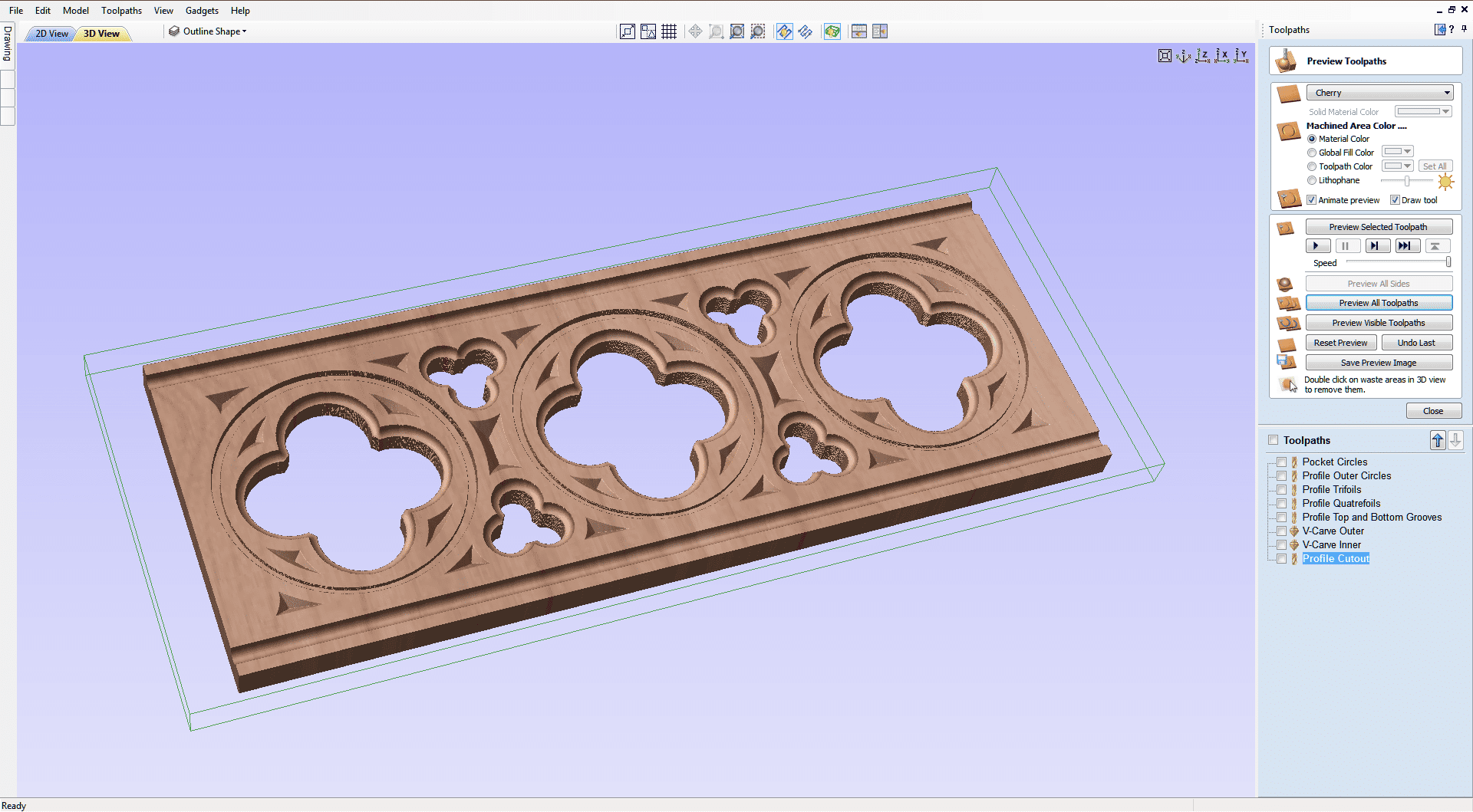
Two workshops can use the same CNC router, cutter and material yet achieve very different results. The difference is often hidden inside the toolpath: how the cutter enters, moves through and leaves the material.
Toolpaths are where CNC skill really lives
When choosing a CNC router, it is natural to focus on the machine, spindle and tooling. However, the instructions given to the machine have just as much influence over the finished component.
A toolpath controls cut direction, entry method, pass depth, stepover, feed movement, retract height and the order in which material is removed. A well-designed strategy keeps the cut smooth and controlled. A poor one can create heat, chatter, tear-out, vibration and premature tool wear.
Good toolpaths are designed around the cutter, material, workholding and finished result. They should not be guessed.
Cut quality
Direction, engagement and finishing passes influence edge and surface quality.
Cycle time
Efficient transitions and fewer air cuts can reduce machining time substantially.
Tool life
Controlled entry, suitable pass depth and correct chip load reduce unnecessary stress.
Machine load
Smoother movement reduces shock, vibration and avoidable loading on the spindle.
Climb cutting
With climb cutting, the cutter moves in a direction that tends to pull it into the material. On well-secured sheet materials, this often produces a cleaner edge, less tear-out and a smoother finish, particularly on veneered or laminated boards.
Strong workholding is important. If vacuum hold-down is weak or the component is small, the cutting force can encourage the workpiece to move.
Conventional cutting
Conventional cutting pushes against the material rather than pulling into it. This can provide additional stability in some situations, but it may create more rubbing, heat, noise and a rougher edge.
Cut direction should be selected deliberately rather than accepted without checking the software settings and the needs of the job.
Ramp into the material instead of plunging straight down
A direct vertical plunge asks the cutter to engage across its full diameter immediately, placing a heavy load on the tool and spindle. A linear, zig-zag or helical ramp introduces the cutter gradually, reducing shock, heat, chatter and the risk of a damaged tool. Ramped entries are especially valuable when machining MDF, plywood, acrylic and aluminium.
Use pocketing to clear material
Pocketing strategies are designed to remove material from an enclosed area using controlled stepovers and more efficient sweeping movements.
Repeatedly tracing the perimeter of a large pocket can be slow, hard on the cutter and less likely to create a clean, even floor.
Use profiling for perimeter work
Profile toolpaths are suited to external shapes, internal cut-outs and finished edges. They follow a defined boundary rather than clearing the entire enclosed area.
Using pocketing for clearance and profiling for perimeter work improves both efficiency and control.
Toolpath efficiency often matters more than feed rate
When a workshop wants a faster cycle time, the first response is often to increase the feed rate. However, a large amount of lost time can come from motion that is not cutting material.
Excessive retracts, unnecessarily high lift heights, repeated clearance moves, too many shallow passes and inefficient transitions can add minutes or even hours across a production run.
Speed is not only how quickly the cutter moves through the material. It is also how little time the machine wastes moving through empty space.
Reduce air cuts
Keep non-cutting movement short and avoid unnecessary travel across the bed.
Control retracts
Use safe but sensible clearance and lift heights rather than excessive movement.
Review pass depth
Too many shallow passes can increase time without improving the finished result.
Order the cuts
A logical machining sequence reduces travel and keeps components securely held.
Common toolpath mistakes
Many avoidable cutting problems begin with a strategy that does not suit the material or component. The machine may still complete the job, but the edge quality, tool life and cycle time suffer.
Can create burnt entry points, chatter and unnecessary loading on the cutter.
May cause chipping or a rough edge when a climb strategy would perform better.
Adds cycle time and tool wear without necessarily improving the cut.
Leaves the final edge dependent on a heavier roughing cut.
A small finishing pass can transform the edge
Leaving a small amount of material for a final full-depth finishing pass can remove tool marks and produce a more consistent edge.
A light finishing allowance of around 0.25mm can make a noticeable difference on suitable jobs, although the correct value depends on the material, cutter and required tolerance.
Do not use one strategy for every material
MDF behaves differently from birch plywood. Acrylic responds differently from aluminium. Toolpaths should reflect how each material cuts, clears chips, holds heat and responds at corners.
Change the strategy before assuming the cutter or machine is at fault.
Material-specific toolpath guidance
Every application requires testing, but these principles provide useful starting points for common CNC router materials.
MDF
Use climb cutting, ramped entries and efficient dust-clearance movements.
Birch plywood
Use climb cutting, consider compression tooling and add a finishing pass.
Acrylic
Use suitable single-flute tooling, maintain chip clearance and avoid excess heat.
Aluminium
Use controlled stepovers, ramped entry and effective chip evacuation.
MDF and plywood
MDF generally machines consistently, but the toolpath still needs to support dust removal and suitable feed through curves. Birch plywood and veneered boards benefit from strategies that control tear-out on both faces.
- Use ramped entries rather than direct plunges.
- Choose cut direction with edge quality in mind.
- Consider compression cutters for laminated boards.
- Use a light finishing pass where required.
Acrylic and aluminium
Acrylic needs a strategy that limits heat and clears chips before they melt back onto the cutter. Aluminium also depends on chip evacuation and controlled cutter engagement.
- Avoid allowing chips to recut around the tool.
- Use smooth ramped entries and sensible stepovers.
- Review movement through tight internal corners.
- Test the complete strategy before full production.
Toolpaths are the hidden engine behind CNC performance
Toolpaths influence cut quality, noise, heat, tool life, material waste, cycle time and machine wear. A high-specification CNC router cannot compensate fully for a poor machining strategy.
The opposite is also true. Better toolpaths can improve results without changing a single component on the machine. A more deliberate approach to entry, direction, pass depth, clearance and finishing can transform the complete workflow.
Machines such as the Olympus ATC CNC router and Pegasus ATC CNC router provide the performance needed for demanding production, but the quality of the programmed strategy still determines how effectively that performance is used.
A CNC router is only as effective as the instructions it is given.
Need help choosing the right CNC router?
Speak to the Opus CNC team about your materials, applications, production requirements, machine specification, installation and operator training.