
What Materials Can and Cannot Be Cut with a CO₂ Laser?
CO₂ laser cutters are extremely versatile, but not every material is suitable or safe. Understanding the material before it enters the machine protects the operator, the laser, the extraction system and the wider workshop.
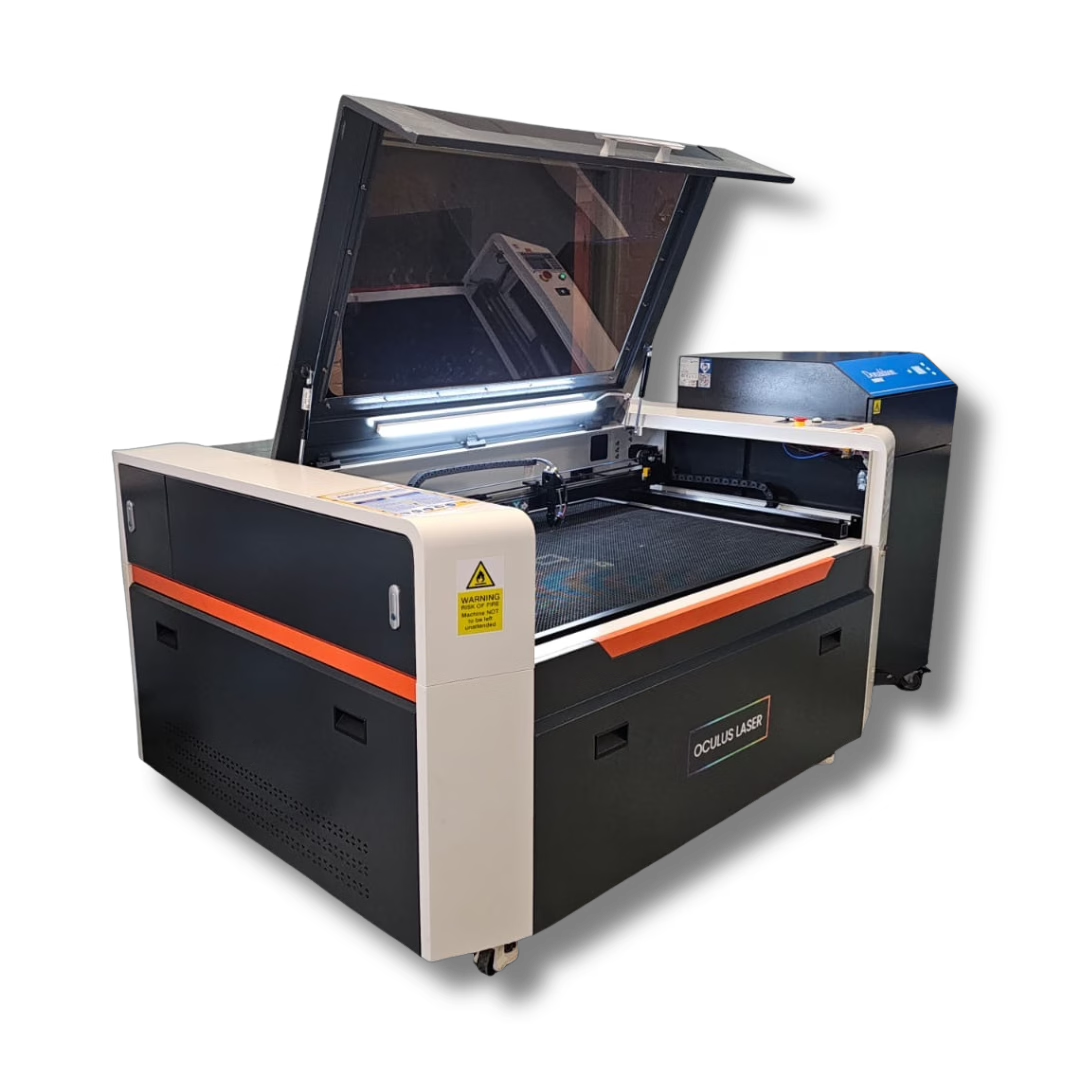
A material fitting inside the laser does not mean it should be processed. Some materials cut cleanly, some require careful checks, and others can release hazardous fumes or damage the machine. When the exact composition is unknown, do not guess.
Start by identifying the exact material
Material names can be misleading. Two sheets may look almost identical while containing different plastics, adhesives, coatings or flame-retardant additives. This is particularly important with foams, synthetic leather, laminated boards and plastics.
Before cutting an unfamiliar material, obtain the manufacturer’s technical information or Safety Data Sheet and confirm that it is suitable for CO₂ laser processing. If the supplier cannot confirm its composition, the safest option is not to place it in the machine.
A laser cutter should never be used to discover what an unknown material contains.
Identify it
Confirm the exact material, coating, adhesive and manufacturing process.
Check it
Review the supplier’s technical information and Safety Data Sheet.
Extract it
Use suitable extraction and air assist for all approved materials.
Supervise it
Never leave a laser cutter operating without supervision.
Materials commonly suited to CO₂ laser cutting
The following materials are widely processed with CO₂ lasers, provided their exact specification is suitable and the correct settings, extraction and operating procedures are used.
Wood, MDF and plywood
Natural wood and wood-based boards are commonly used for signage, models, decorative panels, prototypes and detailed components.
MDF generally cuts consistently but produces significant fumes and fine residue, making effective extraction essential. Plywood performance varies because internal glue layers, knots and voids can cause uneven cutting or heavier charring.
Laser-grade plywood is normally more consistent than general-purpose sheets.
Acrylic or PMMA
Acrylic is one of the most successful materials for CO₂ laser cutting. It can produce a smooth, polished-looking edge and is widely used for signage, lettering, displays, panels and decorative work.
Cast acrylic is often preferred for detailed engraving, while extruded acrylic can cut efficiently. Clear, coloured, mirrored and fluorescent acrylics may all be suitable when their specification is confirmed.
Mirrored acrylic is normally processed from the reverse to protect the reflective face.
Paper, card and cardboard
Paper-based materials cut easily and allow intricate detail, making them useful for packaging prototypes, templates, stencils, models and craft applications.
These materials are highly flammable. Use appropriate speed and power settings, maintain airflow and extraction, and supervise the machine throughout the job.
Confirmed laser-safe leather
Natural leather can be cut and engraved for labels, patches, covers and decorative products, but its tanning process must be known.
Only process leather that the supplier has confirmed is suitable for laser use. Avoid chrome-tanned leather, chemically treated leather and unknown synthetic alternatives.
Suitable does not mean fume-free
Wood, MDF, acrylic, leather, paper and card all create fumes or particulates during processing. Suitable extraction removes contamination at source, helps protect the operator and optics, and supports a cleaner, more consistent cut. Air assist also helps reduce flare-ups, surface marking and residue around the kerf.
Materials that require particular care
Some material groups cannot be judged by appearance alone. Their suitability depends on the exact formulation, treatment, coating or adhesive used during manufacture.
Some foams are suitable, while others contain PVC or hazardous additives. Confirm the composition first.
Many products contain PVC or other unsuitable compounds despite looking similar to natural leather.
The face may be suitable while the adhesive, backing or internal layer is not.
These may contain halogens or additives that make them unsuitable for laser processing.
Materials that should never be cut
The materials below are unsuitable because they can release hazardous gases, corrosive vapours, harmful dust or heavy residues, or because they produce consistently poor cutting results.
PVC, vinyl and PVC-containing products
PVC and vinyl must never be cut or engraved in a CO₂ laser. Laser processing can release hazardous and corrosive chlorine-containing gases that present a serious risk to people and can damage optics, rails, electronics and extraction equipment.
- PVC sheet and expanded PVC board
- Vinyl graphics and flooring
- PVC banner material
- Some faux leathers and synthetic fabrics
- Any unidentified plastic that may contain PVC
ABS and polycarbonate
ABS generally melts, burns and creates heavy, sticky residue rather than producing a clean laser-cut edge. The fumes and deposits can contaminate the machine and optics.
Polycarbonate is often confused with acrylic but behaves very differently. It tends to discolour, char and produce a rough, inconsistent edge, making it unsuitable for CO₂ laser cutting.
Carbon fibre and fibreglass
Carbon fibre, fibreglass and similar reinforced materials can release hazardous dust, fibres and fumes when heated. They can also contaminate the optics, extraction system and internal machine components.
Epoxy and unsuitable resin composites
Epoxy-based composites and materials containing unsuitable resins should not be processed. Their chemical composition can generate hazardous fumes and leave difficult contamination inside the machine.
This includes many composite sheets, resin-infused boards and bonded materials whose composition has not been confirmed.
How to check an unfamiliar material
- Ask the supplier for the exact material specification.
- Obtain and review the current Safety Data Sheet.
- Check coatings, laminates, adhesives and backing layers.
- Confirm that the material is approved for CO₂ laser use.
- Do not rely on appearance, smell or a homemade burn test.
- When any uncertainty remains, do not process the material.
What about bare metal?
The Oculus CO₂ laser range is intended primarily for suitable non-metal materials. Standard CO₂ systems are not the correct choice for cutting most bare metals.
Businesses that need to cut mild steel, stainless steel, aluminium or other sheet metals should consider a suitable Lumi fibre laser cutter.
Good material control protects the whole workshop
Choosing the correct material protects more than the finished component. It helps safeguard the operator, nearby employees, the laser optics, motion components, electronics and extraction system.
The Oculus Benchtop, Oculus Free-Standing and Oculus Flatbed ranges provide flexible CO₂ laser cutting and engraving options for suitable non-metal materials, with installation, operator training and ongoing support from Opus CNC.
Knowing what not to cut is every bit as important as knowing what cuts well.
Unsure which laser or material is right for your application?
Speak to the Opus CNC team about your materials, required bed size, cutting applications, extraction, installation and operator training.