
Why CNC Manufacturing Still Needs Human Skill
CNC routers, lasers and automated systems can deliver extraordinary precision, but the machine does not decide how a job should be approached. Tooling, setup, judgement, material knowledge and care still come from the person standing beside it.
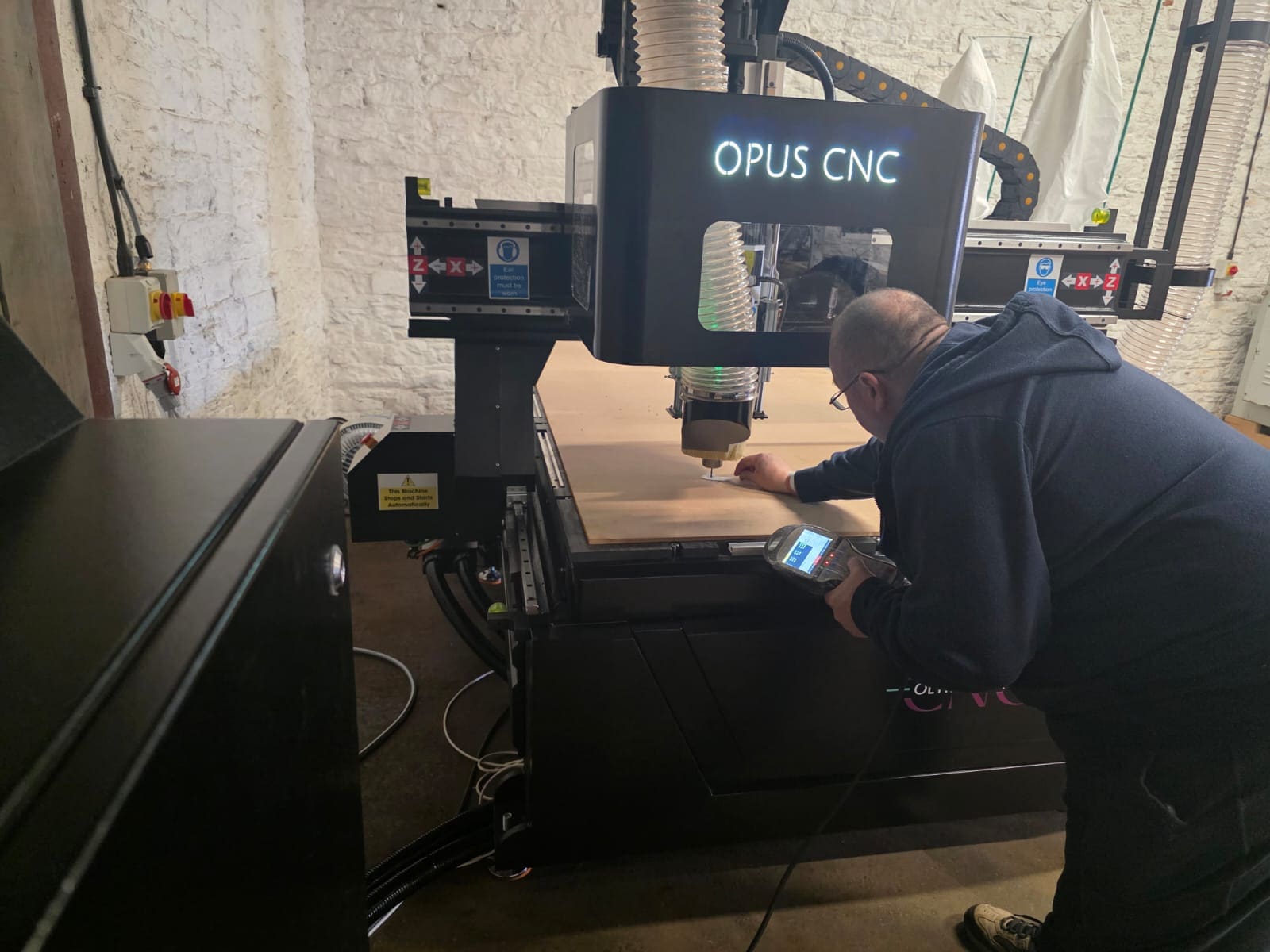
Modern CNC machinery has transformed manufacturing, but it has not removed craftsmanship. It has changed where that craftsmanship lives: in the decisions, observations and experience that shape every job before and during the cut.
A CNC router executes instructions; it does not create judgement
Before the spindle starts, the operator has already made a series of important decisions. The cutter, feed rate, spindle speed, material position, vacuum zones and toolpath strategy all influence the final result.
Once cutting begins, the operator continues to watch, listen and assess. A change in spindle tone, unusually fine dust, vibration or a faint smell of burning material can all indicate that the process needs attention.
A CNC machine supplies repeatable movement. Human judgement turns that movement into reliable production.
Tool selection
The operator chooses the cutter geometry and diameter that suit the material and job.
Cutting strategy
Feed, speed, pass depth and toolpath direction are selected for the required result.
Workholding
Material must be positioned and secured to prevent movement, chatter or damage.
Observation
Sound, chips, dust and finish provide information that software cannot fully interpret.
Two identical machines can produce different results
Two workshops can run the same file using the same software, tooling and CNC router yet achieve noticeably different edge quality.
The difference is often found in setup discipline, tool condition, hold-down, operator awareness and the willingness to adjust the process when something changes.
Listening is still an important skill
A healthy cut usually has a steady, consistent sound. Squealing can suggest rubbing or heat, while rattling and vibration may indicate poor hold-down, an unsuitable tool or excessive cutter load.
Experienced operators learn the normal rhythm of the machine and notice when it changes.
Craftsmanship has not disappeared; it has shifted
Traditional craftsmanship was expressed through hand tools, joints and surface preparation. CNC craftsmanship is expressed through accurate toolpaths, efficient nesting, sensible workholding and an understanding of how the material behaves. The tools have changed, but patience, knowledge and pride remain essential.
Material knowledge cannot be automated completely
Plywood can contain voids and difficult glue layers. MDF can vary in density. Acrylic reacts badly when heat and chips are not controlled. Aluminium requires suitable tooling and effective chip removal.
Operators learn how different materials behave and recognise when the saved settings need to be adapted.
Default settings are only a starting point
Software can calculate a toolpath, but it does not know the full condition of the material, cutter, spoilboard or extraction system.
Professional results often come from testing, observing and making controlled adjustments rather than accepting every default value.
Judgement prevents small problems becoming expensive ones
Human judgement is what tells an operator that a cutter sounds blunt before it breaks, that a vacuum zone is not sealing properly before a component lifts, or that the machining order should be changed before the part loses support.
Sensors and software can measure conditions, but a skilled person interprets those readings in the context of the complete job.
Changes in sound, heat or finish can reveal a dull tool before visible damage appears.
An operator can recognise weak hold-down and investigate leaks or spoilboard condition.
Different batches may require small changes to feed, speed or cutting strategy.
Reordering cuts can improve support, reduce travel and protect smaller components.
Documenting experienced operators’ observations can turn instinct into useful workshop procedures.
Technology multiplies skill rather than replacing it
A CNC router is an advanced tool that converts an operator’s ideas and instructions into accurate, repeatable components.
It can improve output and consistency, but it cannot clean a collet, recognise a poorly optimised file or decide that the current setup presents an unnecessary risk.
Automation still needs ownership
The strongest workshops treat CNC machinery as part of their craft rather than a press-start-and-hope process.
Someone takes responsibility for the machine, tooling, maintenance and quality of the finished result.
Skills that remain essential
- Understanding how different materials behave.
- Selecting suitable cutters and machining strategies.
- Recognising changes in sound, vibration and finish.
- Checking hold-down, offsets and tool condition.
- Improving files and toolpaths through experience.
- Knowing when to stop and investigate a problem.
What the machine contributes
- Accurate and repeatable axis movement.
- Consistent cutting across production batches.
- Automation of complex and repetitive processes.
- Higher output when the setup is correct.
- Digital control of tooling and machining operations.
Human guidance passes knowledge to the next generation
New operators can often learn software and controls quickly. The deeper understanding comes from experienced people explaining why the process works.
Why does cut direction affect the finished edge? Why must collets be kept clean? Why do vacuum leaks matter? Those lessons are easier to understand when they are demonstrated by someone who has seen the consequences first-hand.
Explain the reason
Operators learn faster when they understand why a check or procedure matters.
Share observations
Experienced team members can describe the warning signs they have learned to recognise.
Encourage testing
Controlled trials help new operators understand the relationship between settings and results.
Build confidence
Mentorship helps operators make informed decisions rather than simply following steps.
The best results come from machines and people working together
CNC technology has made manufacturing faster, more accurate and more repeatable. It has not removed the importance of the person planning, setting and supervising the work.
Machines such as the Olympus ATC CNC router and Pegasus ATC CNC router provide the capability required for demanding production, while skilled operators ensure that capability is used safely and effectively.
Machines deliver precision. People give that precision purpose.
Looking to strengthen your CNC capability?
Speak to the Opus CNC team about machine selection, delivery, installation, operator training and ongoing technical support.