
When a CNC job goes wrong, vacuum hold-down is often one of the first things blamed. Parts lift, edges chatter, tooling comes under stress and the immediate assumption is that the vacuum system is not powerful enough. In many cases, the problem is not the pump itself. It is the setup around it.
Vacuum hold-down is not the same as clamping
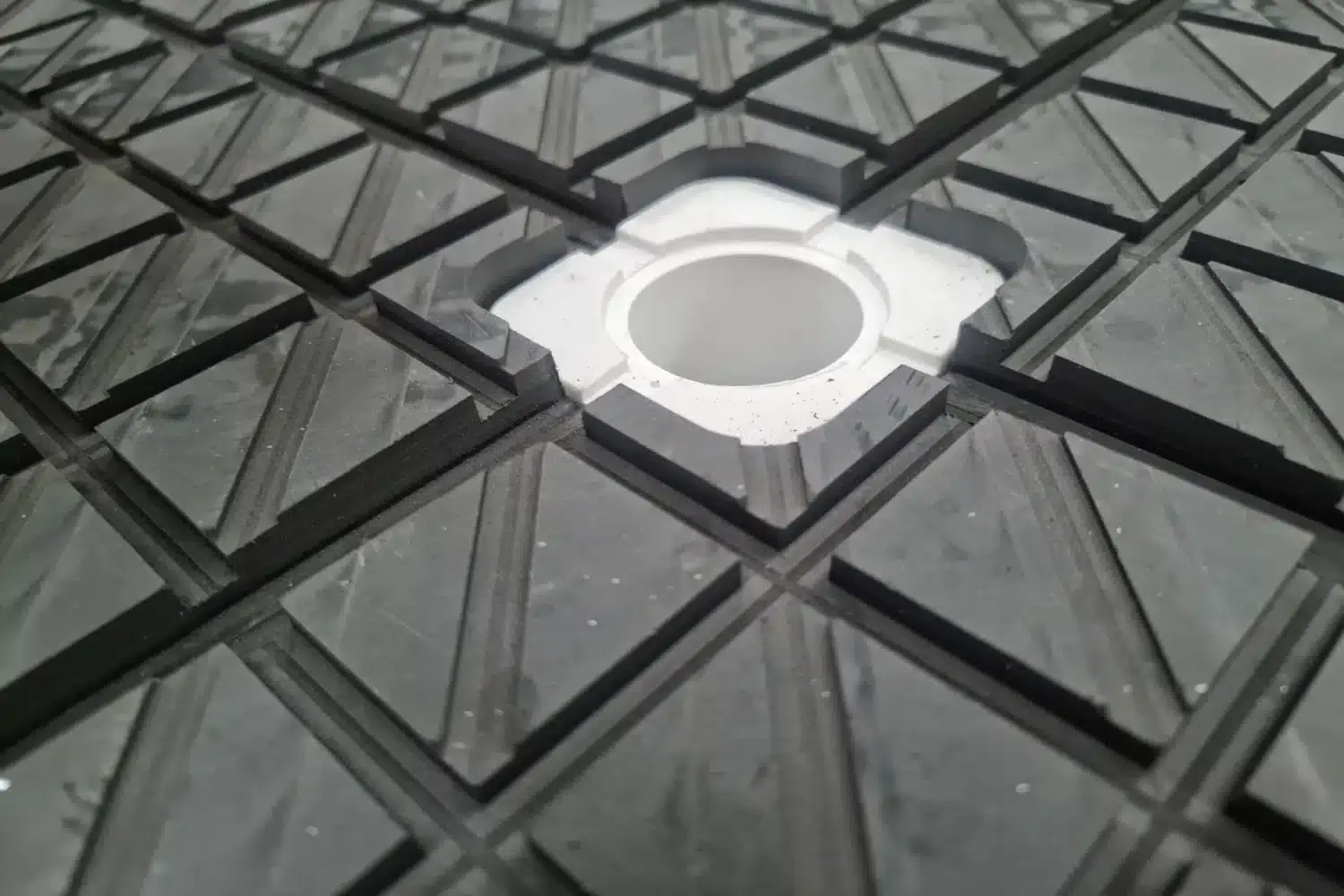
A vacuum bed does not grip material in the same way as a mechanical clamp. It relies on surface contact, air restriction and pressure difference. The better the seal between the material, spoilboard and vacuum bed, the stronger and more reliable the hold becomes.
This is why large, flat sheets usually hold very well, while small parts, porous boards, warped sheets or poorly sealed areas can feel unpredictable. The vacuum system can only work with the conditions it is given.
Vacuum works best when the material, spoilboard and bed are working together to restrict air movement.
Why vacuum sometimes fails
Vacuum problems usually appear when air is allowed to escape too easily or when the material is not making consistent contact with the bed. The pump may still be working correctly, but the hold-down force is being lost before it can do its job.
Spoilboard condition
Grooves, uneven surfaces and blocked or worn areas can reduce the seal between the bed and the material.
Porous materials
MDF, low-density boards and some composites can allow air to pass through them, reducing effective hold-down.
Open zones
Unused vacuum areas left open reduce pressure where it is actually needed, especially on smaller sheets.
Part size
As parts become smaller or are cut free, their contact area reduces and vacuum holding becomes less effective.
The spoilboard is usually the first place to look
A worn or uneven spoilboard is one of the most common causes of poor vacuum performance. Over time, repeated cutting creates grooves, low spots and inconsistent surfaces. These reduce contact and create air leaks.
Regular spoilboard skimming restores a flatter reference surface and helps the vacuum system seal properly again. It is one of the simplest and most effective maintenance habits for improving hold-down.
If the bed is not flat, the vacuum has to fight the setup
Even a strong vacuum system will struggle if the material is sitting on a damaged, uneven or dusty surface. Good vacuum is not just about power; it is about giving the system a clean, flat and sealed path to work through.
A well-maintained spoilboard can make a machine feel completely different, especially when cutting sheet material every day.
Porous materials reduce vacuum strength
Materials such as MDF can machine extremely well, but their porosity can make vacuum hold-down more challenging. Air can pass through the board rather than being fully restricted under it.
This is more noticeable on thinner sheets, low-density boards, smaller parts and jobs where the vacuum has limited contact area. Sealing the spoilboard, using gasketing correctly or adding a suitable sacrificial layer can all help improve performance.
Small parts need extra support
Vacuum beds are excellent for holding full sheets, but they become less effective as parts get smaller. As the cutter removes material, the amount of surface area available for vacuum hold-down reduces.
This is why parts can begin to move, chatter or lift towards the end of a cut. The machine may be accurate and the pump may be working, but the part no longer has enough stable contact with the bed.
- Use tabs where small parts need to remain fixed until the job is complete.
- Consider onion-skin passes to keep parts attached to a thin base layer.
- Use fixtures or jigs for repeat parts that are too small for reliable vacuum hold.
- Think carefully about cutting order so parts remain supported for as long as possible.
Expecting vacuum to hold tiny parts without support is one of the easiest ways to make a CNC job feel unreliable.
Unused vacuum zones must be closed
Leaving unused vacuum zones open is one of the most common and avoidable causes of weak holding. Any open area allows air to escape, reducing pressure where the material actually sits.
Good vacuum performance is often about containment. Closing unused zones, sealing exposed areas and keeping gaskets clean helps concentrate suction where it is needed.
This becomes especially important when machining half sheets, smaller nested jobs or material that does not cover the full bed.
Dust quietly destroys vacuum performance
Dust and fine debris can have a major impact on vacuum hold-down. A dusty spoilboard prevents good contact, blocks airflow unevenly and creates small air paths between the material and the bed.
Cleaning the bed before loading material takes very little time, but it can prevent frustrating movement, chatter and inconsistent holding.
Clean the bed
Vacuum the spoilboard and remove fine dust before loading the next sheet.
Check the zones
Close any unused vacuum areas so suction is focused where the material sits.
Inspect the surface
Look for grooves, low spots or damage that could create air leaks.
Control the cut
Use sensible pass depths, cutting strategies and support methods where vacuum is marginal.
Toolpaths and vacuum performance are connected
Vacuum hold-down is not only influenced by the bed. It is also affected by the forces created during cutting. Aggressive toolpaths, deep passes and sudden direction changes can increase the force trying to lift or move the material.
If the hold-down is already marginal, these cutting forces reveal the weakness quickly. Sometimes the solution is not more suction, but less stress on the part.
Reducing pass depth, adjusting cutting direction, adding tabs, changing the cutting order or using a finishing pass can all improve stability.
The best vacuum setup works with the toolpath
Good vacuum hold-down and good programming support each other. The more stable the material remains, the cleaner the cut is likely to be. The more sensible the toolpath is, the less the vacuum system has to fight.
Reliable CNC routing comes from managing the whole process, not looking at the pump in isolation.
Vacuum is not always the right answer
Vacuum beds are extremely effective, but they are not the perfect holding solution for every job. Very small parts, awkward shapes, thick uneven materials, secondary operations and unusual one-off components may be better held with clamps, fixtures or jigs.
Knowing when not to rely entirely on vacuum is a sign of a mature CNC workflow. The best workshops adapt the holding method to the job rather than forcing every job to behave the same way.
- Use vacuum for flat sheet work with good surface contact.
- Use tabs or onion skinning where parts become unstable during cutting.
- Use fixtures for repeat small components or awkward shapes.
- Use clamps where vacuum cannot provide reliable holding on its own.
Reliable vacuum comes from repeatable habits
Vacuum hold-down improves when the setup becomes consistent. Cleaning the bed, skimming the spoilboard, closing unused zones, checking material flatness and choosing sensible toolpaths all contribute to better results.
Machines such as the Olympus ATC CNC router and Pegasus ATC CNC router are designed for production environments where reliable hold-down matters, but the day-to-day process still plays a major role.
Vacuum hold-down works best when it is treated as part of the machining process, not as a background feature.
Final thoughts from the workshop floor
Reliable vacuum hold-down is not simply about having the biggest pump. It is about flat surfaces, clean working habits, sealed zones, sensible toolpaths and understanding how air behaves under the material.
When vacuum is treated properly, it becomes one of the most useful tools in the CNC workshop. When it is ignored, it becomes one of the easiest things to blame.
Vacuum works best when you work with it, not against it.
Need help improving CNC hold-down?
Speak to the Opus CNC team about CNC router setup, vacuum beds, tooling, training and choosing the right machine for your materials and production workflow.